
Welcome to SHAREs in Hungary

SHAREs in Hungary-
building knowledge and community power
Hungary has long been one of the leading countries regarding the transposition of the EU’s RED and Clean Energy Package. The Electricity Act enabled the establishment of energy communities in 2021, but in retrospect, the wording was too general work out taking into account the strict regulations of other market participants. In the wake of the pandemic and the global economic and political changes of the last three years, the country’s leading position has slowly evaporated despite the findings and the ambitious goals of the SHAREs project. In addition, many of our initiatives have failed or reached a dead end due to the lack of a more favourable environment. Our local partners and pioneers have applauded the results of the project – the white-label materials, the great messages and the useful tools for membership recruitment –, but we believe there is still a lot of work to be done. This includes community development, advocacy and capacity building in all participating sectors to help, support and facilitate the first, truly functioning energy communities in Hungary.
Information platform for local heroes
As the relevant Hungarian NGOs are very active in international projects funded by the EU, there are several useful studies, tools and recommendations for all levels of political decision-making in the country – unfortunately without any major effect or result. These findings are slowly being forgotten, although they would be of great use long after a project has ended. In Hungary, people are sceptical about centralised resource hubs for a single topic because of the credibility of the organisations in charge. Based on the international consortium of the SHAREs project and the professional work of the leading partner AEA, we decided to build the Hungarian gateway as a one-stop shop website for local heroes who want to act within or through an energy community. We collected the findings of former international projects of relevant NGOs and linked their pages with our professional partners. We also translated and adapted the useful materials from the blueprint and presented them at public informational events and conferences. There is huge interest in the website, but the only four registered energy communities combined with the 10,261 views in February this year show us that long-term guidance and support of the SHAREs partner organisations are needed in Hungary.
Three important achievements that would not have been possible without SHAREs
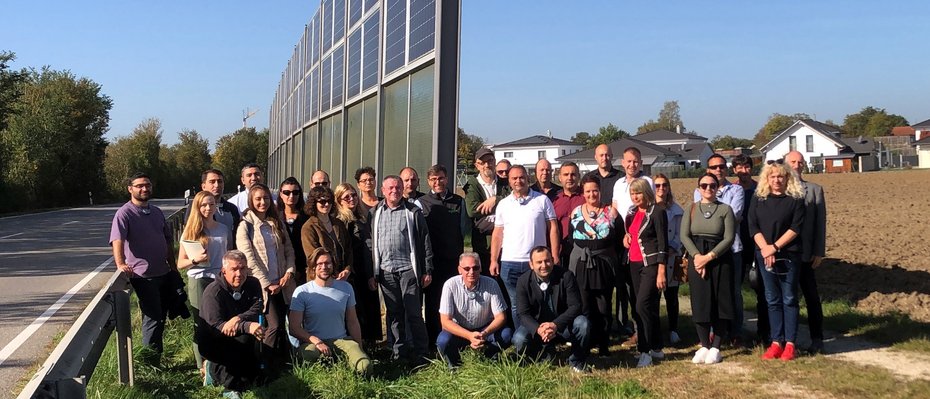
Thanks to the good examples provided by Austrian energy communities and the SHAREs study tours, several pilots and potential stakeholders are now deeply engaged in the idea of creating a local energy community. It was an important experience to see that the learning by doing approach in Austria is an effective way to create and run energy communities.
An important insight is that each community is unique and needs a tailor-made energy community form and solution. The blueprint explicitly provides a lot of support material for this.
The national and international professional contacts established through SHAREs – especially with the AEA and REGEA – have increased our knowledge of policy advocacy. It has also provided us with new recommendations and good practices to pass on to national policy makers.
Key takeaways
Austria’s learning by doing approach is much more future-oriented than Hungary’s current approach.
Bottom-up initiatives are also feasible in the current legal environment if the local heroes are motivated to find a model tailored to their issue and circumstances and if they have the capacity and the commitment to take the process all the way to the finish line.
We developed strong professional bonding and partnerships with the consortium members for future collaborations in other projects.
Hungarian SHAREs pilots
Hungarian project partners
The umbrella organisation National Society of Conservationists – Friends of the Earth Hungary encompasses 110 member associations across Hungary. Its key areas of work are climate and energy-policy advocacy work, public awareness raising and active stakeholder involvement. MTVSZ has vast experience in national and regional level complex campaigns and continuously encourages local authorities to participate in community energy and address energy poverty.
Your contact-person: Kovács Bence
The Reflex Environmental Association was established in 1987 and focuses on eco-counselling (founder of Hungarian network of eco-counselling offices), environmental education, nature conservation and energy issues, waste management, consumer protection, regional development and noise protection. Reflex also gives free legal advice on environmental topics. Reflex is an official Climate Alliance representative of Hungary since 2009 and hence strongly involved in the activities of the European Climate Alliance.
Your contact-person: Krisztina Szabó
last updated: 06/2025